
Published · By SNR Foods
What Is Hot Break Tomato Paste?
Hot break tomato paste is processed at a higher temperature during the initial breaking stage to inactivate pectin-degrading enzymes and retain more of the tomato's natural pectin structure. Learn how hot break processing affects viscosity, consistency, flavour, colour and its suitability for ketchup, sauces and other food manufacturing applications.

When food manufacturers purchase tomato paste, specifications such as Brix, viscosity, colour and processing method can all influence how the ingredient performs in the final product.
One important processing term that buyers and product developers often come across is Hot Break.
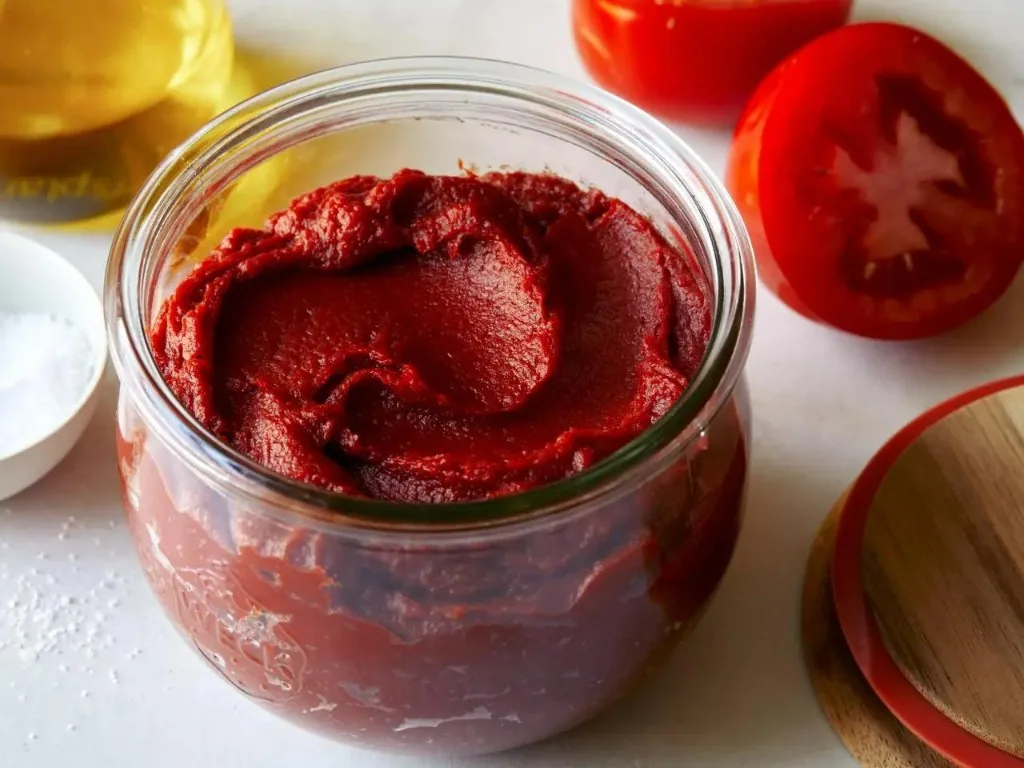
Hot break tomato paste is produced by heating crushed tomatoes at a relatively high temperature during the initial processing stage. This rapid heating helps inactivate enzymes that can break down pectin, helping the finished tomato paste retain more of its natural structure and develop higher viscosity.
For manufacturers producing ketchup, pizza sauce, pasta sauce and other products where body and consistency are important, understanding hot break processing can help when selecting the right tomato ingredient.
What Does Hot Break Mean in Tomato Processing?
The term "break" refers to the initial thermal treatment applied to tomatoes after they are crushed or chopped during industrial processing.
In a hot break process, the crushed tomatoes are heated to a relatively high temperature, commonly around 85°C or higher depending on the processing system. This rapid heating is intended to deactivate pectin-degrading enzymes such as pectin methylesterase and polygalacturonase.
These enzymes can break down pectin in tomatoes. By reducing their activity early in processing, hot break processing helps preserve more of the pectin structure that contributes to the body and viscosity of tomato products.
Research comparing hot break and cold break tomato products has found that hot break processing generally produces higher viscosity and consistency under comparable conditions. The difference is associated with preservation of the tomato's pectin and changes in the physical properties of the pulp.
Why Is Pectin Important in Tomato Paste?
Pectin is a naturally occurring component of tomato cell walls and plays an important role in the texture and rheological behaviour of tomato products.
When pectin-degrading enzymes remain active during processing, they can break down pectin and reduce the structure of the tomato pulp. This can result in a product with lower viscosity.
Hot break processing is designed to limit this enzymatic breakdown at an early stage. As a result, hot break tomato paste generally has greater body and viscosity than comparable cold break tomato paste.
This characteristic can be particularly useful when the finished food product requires a thick and consistent tomato base.
How Is Hot Break Tomato Paste Made?
Although industrial processing systems can vary between manufacturers, the basic process generally involves several stages.
1. Tomato Selection
Fresh tomatoes suitable for processing are selected based on characteristics such as maturity, colour, quality and processing requirements.
2. Washing and Sorting
The tomatoes are washed to remove dirt and foreign material and are inspected to remove unsuitable fruit.
3. Crushing
The tomatoes are crushed to release the juice and pulp and prepare them for the thermal break stage.
4. Hot Break Treatment
The crushed tomatoes are rapidly heated to a relatively high temperature. This step is critical because it helps inactivate pectin-degrading enzymes before they can significantly break down the tomato's natural pectin.
5. Refining and Finishing
The heated tomato material can then be refined and finished to remove unwanted skin, seeds and coarse particles, depending on the required product specification.
6. Concentration
The refined tomato material is concentrated to the required soluble-solids level or Brix specification.
For example, manufacturers may purchase tomato paste according to specifications such as 28/30 Brix or 36/38 Brix.
7. Packaging
The concentrated tomato paste is then packed according to the required commercial and food safety specifications.
What Are the Main Characteristics of Hot Break Tomato Paste?
Hot break processing is mainly associated with the development of higher viscosity and consistency.
Some of the characteristics manufacturers may look for include:
- Higher viscosity
- Greater body and consistency
- Better retention of tomato pectin structure
- Suitable performance in thick tomato-based formulations
- Good suitability for products where texture and consistency are important
However, the final characteristics of tomato paste depend on more than the break temperature alone. Tomato variety, processing conditions, concentration, particle characteristics and other manufacturing parameters can also influence the final product.
Hot Break vs Cold Break Tomato Paste
The main difference between hot break and cold break tomato paste is the temperature used during the initial processing stage.
Break temperature Higher temperature Lower temperature Enzyme activity More rapid inactivation Greater potential for enzyme activity during the early stage Pectin retention Generally higher Generally lower Viscosity Generally higher Generally lower Typical application focus Ketchup and thicker sauces Juices and products where a lighter consistency may be preferredThe choice between hot break and cold break should therefore be based on the requirements of the finished product rather than treating one processing method as universally better.
Why Is Hot Break Tomato Paste Used for Ketchup?
Ketchup requires a controlled combination of tomato solids, viscosity, texture, flavour and consistency.
Because hot break processing helps retain more of the tomato's natural pectin structure, hot break tomato paste can be useful in formulations where higher viscosity and body are important.
This is one reason hot break tomato ingredients are commonly considered for ketchup and other thick tomato-based sauces.
However, the appropriate tomato paste depends on the complete formulation. Manufacturers should evaluate the paste in their actual recipe and processing conditions rather than selecting an ingredient based only on the term "Hot Break."
Does Hot Break Mean Higher Brix?
No.
Hot Break and Brix describe two different aspects of tomato paste.
Hot Break refers primarily to the processing method used during the initial breaking stage, while Brix refers to soluble-solids concentration.
For example, a manufacturer may evaluate tomato paste based on both its break type and its Brix specification.
A buyer may therefore need to consider questions such as:
- Is the paste Hot Break or Cold Break?
- What Brix specification is required?
- What viscosity is required?
- What colour and flavour profile are required?
- What is the intended finished product?
- What dosage is required in the formulation?
Understanding Brix separately from processing method is important when comparing tomato paste suppliers.
Hot Break Tomato Paste and Tomato Concentrate
Tomato paste and tomato concentrate are closely related tomato ingredients, but terminology and specifications can vary depending on the product and market.
If you want to understand tomato concentrate in more detail, read What Is Tomato Concentrate and How Is It Made?
Manufacturers evaluating tomato ingredients should also understand the difference between puree and more concentrated tomato products. You can read What Is Tomato Puree and How Is It Made? for a detailed explanation.
What Should Food Manufacturers Consider When Buying Hot Break Tomato Paste?
For commercial food production, the break type should be considered together with the complete product specification.
1. Application
Start with the finished product. Ketchup, pizza sauce, pasta sauce, ready-to-eat foods and other tomato-based products can have different requirements.
2. Viscosity
If the finished product requires a thick and stable texture, the viscosity specification of the tomato paste should be evaluated alongside the break type.
3. Brix
Confirm whether your formulation requires 28/30 Brix, 36/38 Brix or another specification. Brix influences the concentration of the tomato ingredient and should be evaluated according to the formulation requirement.
4. Colour
Colour is an important consideration for many tomato-based products. Processing conditions can influence the colour of tomato ingredients, so manufacturers should establish a suitable colour specification.
5. Flavour
Heat treatment can influence the flavour profile of tomato products. Manufacturers should evaluate samples in their actual formulation to determine whether the ingredient delivers the desired tomato character.
6. Processing and Supply Consistency
For industrial production, consistent specifications and reliable supply are essential. Procurement teams should evaluate supplier documentation, specifications, food safety requirements and batch consistency before moving to regular bulk purchasing.
Is Hot Break Tomato Paste Right for Your Product?
Hot break tomato paste can be a strong option for manufacturers looking for a tomato ingredient with higher body and viscosity, particularly for ketchup and thicker tomato-based sauces.
However, the right ingredient depends on the complete formulation. Break type, Brix, viscosity, colour, flavour, processing conditions and cost should all be considered together.
A product trial is often the best way to determine whether a particular hot break tomato paste performs correctly in your manufacturing process.
Conclusion
Hot break tomato paste is produced using a higher-temperature treatment during the initial breaking stage of tomato processing. The purpose is to rapidly inactivate pectin-degrading enzymes and help retain the tomato's natural pectin structure.
This processing approach generally results in tomato paste with higher viscosity and greater body compared with comparable cold break products.
For food manufacturers, hot break can be particularly relevant when producing ketchup, pizza sauce, pasta sauce and other applications where consistency and viscosity are important.
But hot break is only one part of the specification. Manufacturers should also evaluate Brix, viscosity, colour, flavour, processing performance and supply consistency before selecting a tomato paste for commercial production.
If you are looking for tomato ingredients for your manufacturing requirements, inquire with SNR Foods to discuss your application and product requirements.
Our products

Other Fruits
Aseptic red papaya, white guava, pineapple and banana puree and concentrate, plus seasonal raw fruits sourced directly from our partner farmers.
Read moreGet in touch
Have a question about this post or our products? Send us a message and our team will get back to you.