
Published · By SNR Foods
What Is Tomato Concentrate and How Is It Made?
Tomato concentrate is a versatile tomato ingredient made by processing fresh, ripe tomatoes to remove excess water and achieve a thicker, more concentrated product. Learn how tomato concentrate is made, how it differs from tomato puree, the importance of Brix, and how it is used by food manufacturers.
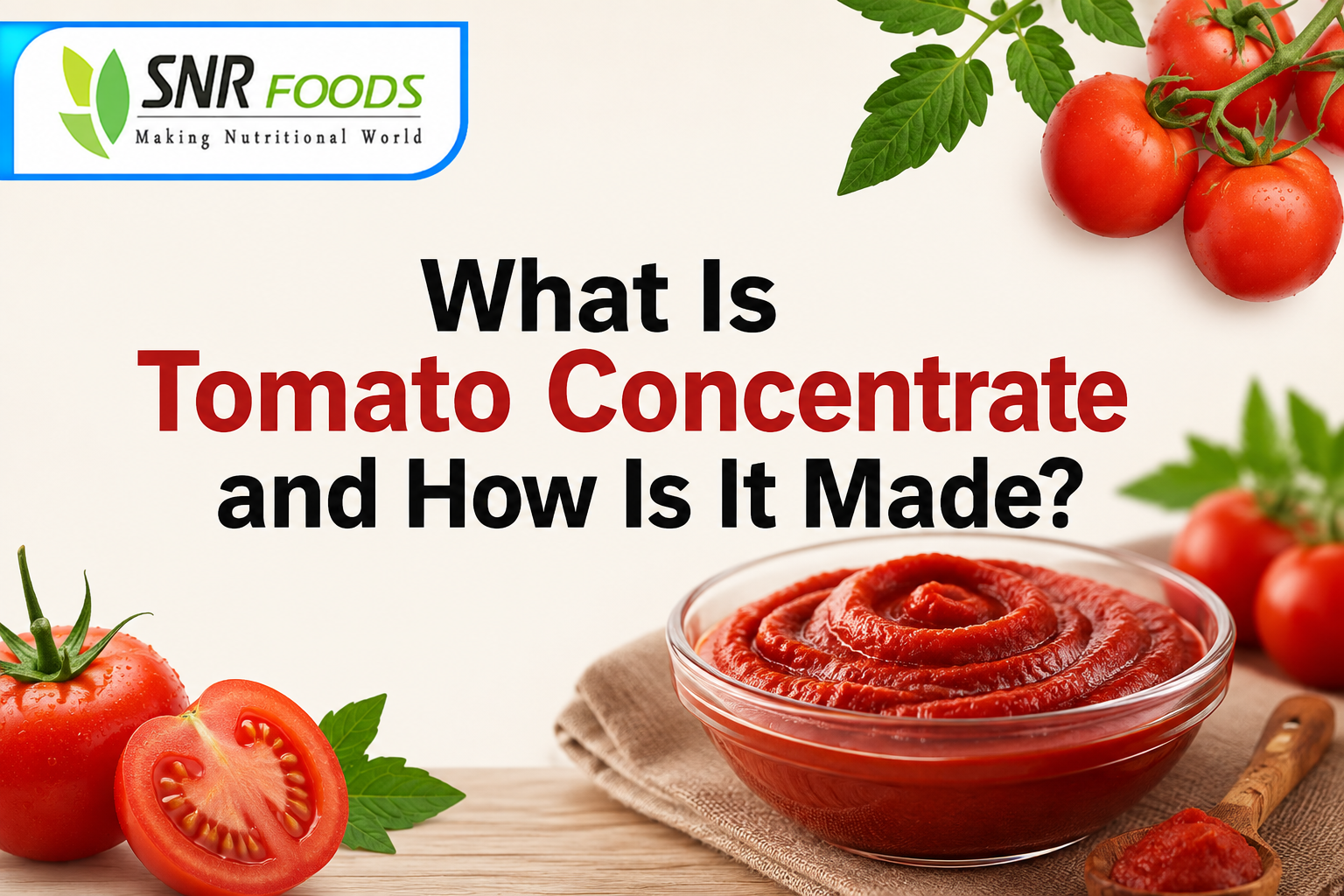
Tomato concentrate is one of the most widely used tomato-based ingredients in the food processing industry. It provides the rich tomato flavour, colour, acidity, and consistency required in products such as sauces, ketchup, soups, ready-to-eat meals, seasonings, snack products, and other processed foods.
But what exactly is tomato concentrate, and how is it made from fresh tomatoes? Understanding the manufacturing process can help food manufacturers, importers, distributors, and food brands choose the right tomato ingredient for their applications.
What Is Tomato Concentrate?
Tomato concentrate is produced by processing fresh tomatoes and reducing their water content to obtain a thicker and more concentrated tomato ingredient.
Compared with fresh tomatoes, concentrate offers a significantly higher concentration of tomato solids. This makes it easier to store, transport, formulate, and use in commercial food production.
Tomato concentrate can be used as a base ingredient or as part of a formulation where manufacturers need consistent tomato flavour, colour, acidity, and texture.
Tomato Concentrate vs Tomato Puree
Tomato concentrate and tomato puree are closely related products, but they are not exactly the same. The primary difference is the level of concentration and the amount of water removed during processing.
Tomato puree generally has a smoother, less concentrated consistency and is commonly used when a product requires a fresh tomato character and a relatively lighter texture.
Tomato concentrate, on the other hand, contains a higher proportion of tomato solids and is useful when manufacturers need a stronger tomato profile or want to add tomato solids without introducing excessive moisture into the formulation.
If you want to understand the tomato puree manufacturing process in greater detail, read our guide: What Is Tomato Puree and How Is It Made?
How Is Tomato Concentrate Made?
Producing high-quality tomato concentrate involves several carefully controlled stages. The objective is to retain the desirable characteristics of the tomatoes while producing a consistent ingredient suitable for commercial food applications.
1. Selection of Fresh Tomatoes
The process begins with the selection and procurement of suitable fresh tomatoes. The quality of the raw tomatoes plays an important role in determining the final colour, flavour, aroma, acidity, and overall quality of the concentrate.
Tomatoes intended for processing are selected based on factors such as maturity, quality, appearance, and suitability for processing.
2. Inspection and Sorting
After procurement, the tomatoes are inspected and sorted. Damaged, spoiled, or unsuitable tomatoes are removed before the processing stage.
Careful sorting helps maintain consistency in the raw material entering the production line.
3. Washing
The selected tomatoes are thoroughly washed to remove dirt and other unwanted material from their surface.
Proper cleaning is an important part of maintaining hygienic processing conditions and ensuring that the raw material is suitable for further processing.
4. Crushing and Pulping
The cleaned tomatoes are crushed and processed to separate the usable tomato pulp from unwanted components such as seeds and skin.
This produces a smoother tomato pulp that can then be processed further to achieve the desired concentration and consistency.
5. Heating and Concentration
The tomato pulp is then subjected to controlled heating and concentration. During this stage, excess water is removed from the tomato pulp, increasing the concentration of tomato solids.
The level of concentration can be controlled according to the required product specification and intended application.
This stage is particularly important because excessive heat or poor process control can negatively affect the natural colour, flavour, and quality characteristics of the finished product.
6. Quality Control
Quality control is carried out throughout the manufacturing process to ensure that the finished tomato concentrate meets the required specifications.
Depending on the application and customer requirements, parameters such as Brix, colour, acidity, consistency, microbiological quality, and other product specifications may be evaluated.
Brix is particularly important when purchasing tomato concentrate because it indicates the level of soluble solids in the product. Manufacturers can select an appropriate concentration based on their formulation and production requirements.
Why Is Brix Important in Tomato Concentrate?
One of the most important specifications when buying tomato concentrate is its Brix level.
Brix is commonly used in the food industry to indicate the concentration of soluble solids in products such as tomato paste and concentrate. A higher Brix generally indicates a more concentrated product.
For food manufacturers, understanding Brix is important because it can influence formulation, dosage, product consistency, cost calculations, and the amount of tomato solids delivered into the final product.
Coming soon: SNR Foods will also cover Brix in greater detail in a dedicated article explaining what tomato Brix means and how manufacturers can select the right concentration for different applications.
Why Is Tomato Concentrate Used by Food Manufacturers?
Tomato concentrate offers several practical advantages for commercial food production.
- Consistent tomato flavour: Provides a dependable tomato base for different formulations.
- Higher tomato solids: Allows manufacturers to incorporate more tomato solids without adding excessive water.
- Ease of formulation: Can be incorporated into a wide range of food products.
- Convenient storage and transportation: The concentrated form reduces the volume of water that needs to be transported.
- Versatile application: Suitable for sauces, ketchup, soups, ready meals, seasonings and other processed food products.
- Consistent production: Industrially processed concentrate can help manufacturers maintain consistency between production batches.
Applications of Tomato Concentrate
Tomato concentrate is used across several segments of the food industry. Common applications include:
- Tomato ketchup
- Tomato sauces
- Pizza and pasta sauces
- Soups
- Ready-to-eat meals
- Curries and gravies
- Snack seasonings
- Processed food products
- Foodservice preparations
Why Packaging Matters for Tomato Concentrate
Packaging is an important consideration when sourcing tomato concentrate, particularly for manufacturers purchasing products in bulk.
Proper packaging helps protect the product during transportation and storage while reducing the risk of contamination and exposure to external factors.
At SNR Foods, aseptic packaging is used for suitable processed food products because it helps maintain product quality and supports longer shelf life when combined with appropriate processing and storage conditions.
Learn more about the advantages of aseptic packaging in our detailed article: Why We Use Aseptic Packaging Instead of Conventional Plastic Packaging
Choosing the Right Tomato Concentrate Supplier
For food manufacturers and distributors, choosing a tomato concentrate supplier is about more than just price. Raw material quality, processing standards, consistency, specifications, packaging, food safety, and supply reliability all play an important role.
SNR Foods India Private Limited manufactures and supplies tomato paste and concentrate using carefully selected tomatoes. The tomatoes are inspected, washed, crushed, pulped, and processed under controlled manufacturing conditions to achieve the required consistency. SNR Foods also works with customers requiring processed fruit and vegetable ingredients for domestic and export markets.
When sourcing tomato concentrate, buyers should clearly communicate their required Brix, packaging format, quantity, application, delivery requirements, and other product specifications to the supplier.
Order Tomato Concentrate from SNR Foods
Looking for a reliable supplier of tomato concentrate for your food manufacturing business?
SNR Foods supplies tomato concentrate for commercial food applications and works with businesses looking for consistent quality and dependable supply.
Order Tomato Concentrate from SNR Foods
Looking for Tomato Puree or Tomato Concentrate?
Whether you need tomato puree for a formulation requiring a smooth tomato base or tomato concentrate for higher tomato solids and a more concentrated flavour, choosing the right product can make a significant difference to your finished product.
If you are looking for bulk tomato puree or tomato concentrate for your food manufacturing, foodservice, or distribution business, get in touch with the SNR Foods team to discuss your requirements.
Need Tomato Puree or Tomato Concentrate?
Tell us your required quantity, specifications, application, and packaging requirements. Our team will help you identify the right tomato product for your business.
Our products
Other Fruits
Aseptic red papaya, white guava, pineapple and banana puree and concentrate, plus seasonal raw fruits sourced directly from our partner farmers.
Read moreGet in touch
Have a question about this post or our products? Send us a message and our team will get back to you.