
Published · By SNR Foods
Organic Mango Farming in Kolar District, Karnataka: From Sustainable Cultivation to Mango Concentrate
Explore how sustainable and organic mango farming in Kolar district, Karnataka, supports healthier orchards, responsible agriculture, and quality mango production and how SNR Foods brings quality mango ingredients from responsible sourcing to food and beverage manufacturers.
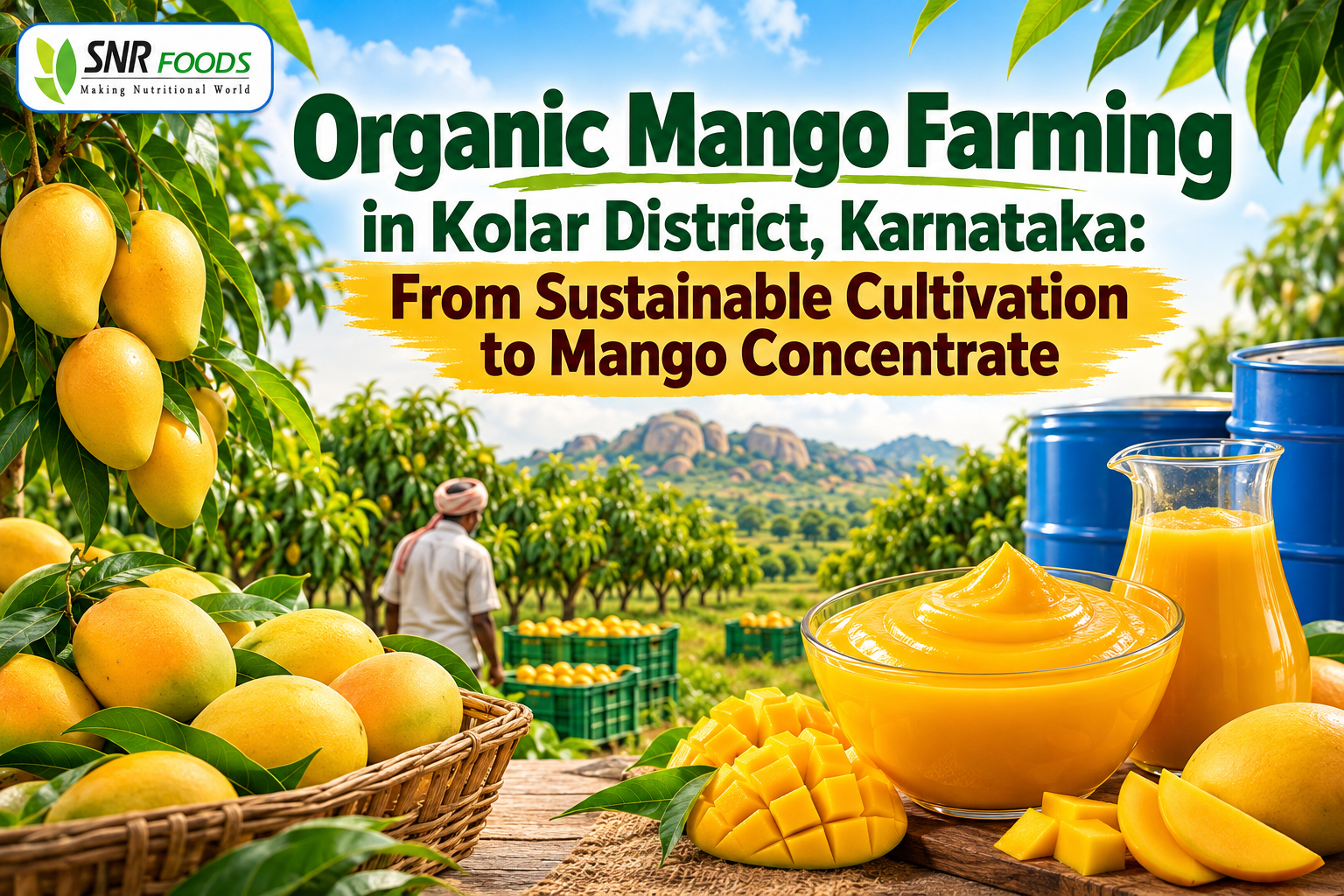
In an era where sustainable agriculture is becoming increasingly important, the way mangoes are grown matters just as much as how they are processed and delivered to consumers.
In Kolar district, Karnataka, near Bengaluru, mango cultivation is supported by farming practices that combine traditional agricultural knowledge with modern approaches to soil management, water conservation, pest control, and orchard care.
For SNR Foods, the journey of a mango does not begin at the processing facility. It begins in the orchard. Understanding mango cultivation, sourcing, and quality at the farm level helps create a stronger foundation for producing mango puree and concentrate for food and beverage manufacturers.
Why Mangoes? Why Organic?
Mangoes are often called the “King of Fruits” because of their distinctive flavor, aroma, versatility, and nutritional value. India is home to numerous mango varieties, each with unique characteristics suited to different culinary and industrial applications.
At the same time, mango farming faces several challenges, including soil degradation, changing weather conditions, pest pressure, water availability, and the increasing need for responsible agricultural practices.
Organic and sustainable farming approaches focus on maintaining soil health, using natural and permitted agricultural inputs, conserving water, and protecting the long-term productivity of the orchard.
For businesses such as SNR Foods, responsible agricultural practices are an important part of understanding the quality and characteristics of the raw mangoes used to produce processed mango ingredients.
Mango Farming in Kolar District, Karnataka
Kolar district, Karnataka, near Bengaluru, has a strong agricultural identity and is home to mango-growing areas. The region's climate, soil conditions, and agricultural traditions make mango cultivation an important part of the local farming landscape.
Sustainable mango farming in the region can involve a combination of traditional knowledge and modern agricultural practices. Farmers may receive guidance on orchard management, soil health, irrigation, natural pest control, and responsible crop protection.
These practices are important not only for farmers but also for the wider mango supply chain. For SNR Foods, maintaining a strong connection between quality fruit sourcing and processing is essential for supplying reliable mango ingredients to B2B customers.
How Organic Practices Can Help Mango Farmers
Organic mango farming focuses on creating a healthy growing environment rather than depending solely on synthetic agricultural inputs.
Sustainable orchard management may include:
- Natural pest management
- Organic manure and compost application
- Good Agricultural Practices (GAPs)
- Soil health management
- Efficient water management
- Orchard sanitation
- Natural and biological disease-management practices
These practices can contribute to healthier orchards while helping farmers manage their natural resources more responsibly.
Mango Varieties Used for Different Applications
Different mango varieties have different flavor, aroma, color, texture, and processing characteristics. This makes variety selection particularly important when mangoes are intended for commercial processing.
Mango varieties commonly associated with Indian cultivation include:
- Alphonso Mango
- Totapuri Mango
- Neelam Mango
- Rumani Mango
- Sindhura Mango
- Banganapalli Mango
- Mulgoa Mango
For SNR Foods, different mango varieties can serve different commercial requirements. Mangoes can ultimately be processed into products such as puree and concentrate for applications across the food and beverage industry.
Soil Management in Sustainable Mango Farming
Healthy soil is one of the foundations of sustainable agriculture.
Organic mango cultivation can incorporate materials such as farmyard manure, compost, vermicompost, and other permitted organic inputs to support soil structure and nutrient availability.
Proper soil management can help create favorable growing conditions for mango trees and support long-term orchard productivity.
From a supply-chain perspective, healthy orchards are also an important starting point for businesses such as SNR Foods, where the quality of the final mango ingredient is influenced by the quality and characteristics of the fruit entering the processing chain.
Efficient Water Management
Water conservation is another important component of sustainable mango farming.
Drip and other micro-irrigation systems can deliver water closer to the plant's root zone and potentially reduce unnecessary water loss compared with conventional irrigation methods.
Efficient irrigation can help farmers manage water resources while supporting healthy mango trees, particularly during periods of limited rainfall or increased water demand.
Panchagavya and Traditional Farming Practices
Panchagavya is a traditional agricultural preparation used in some natural and organic farming systems in India.
Traditional formulations may include cow dung, cow ghee, cow urine, milk, curd, tender coconut water, jaggery, and ripe bananas.
Farmers who use traditional preparations such as Panchagavya may incorporate them into broader orchard-management practices focused on natural farming.
However, agricultural inputs used in certified organic production should comply with the relevant organic-certification standards and applicable agricultural regulations.
Natural Pest Management in Mango Orchards
Pest management is an important challenge in mango cultivation. Sustainable farming systems can use integrated pest-management approaches to monitor and manage pests while reducing unnecessary dependence on synthetic chemical pesticides.
Common mango pests can include:
- Thrips
- Hoppers
- Webbers
- Mealybugs
- Aphids
- Fruit flies
Neem-Based Pest Management
Neem-based preparations have traditionally been used in natural and organic farming. Neem contains compounds such as azadirachtin that can act as feeding deterrents and insect growth regulators.
Neem-based products may be incorporated into integrated pest-management programs depending on the crop, pest pressure, organic-certification requirements, and local agricultural recommendations.
Managing Fruit Flies
Fruit flies can affect mango quality, particularly as fruit approaches maturity.
Organic fruit-fly traps can be used as part of an integrated pest-management strategy to monitor and reduce fruit-fly populations.
Combining traps with orchard sanitation, monitoring, and appropriate cultural practices can help farmers protect mango crops while maintaining responsible farming practices.
Organic Mango Disease Management
Maintaining healthy mango trees is essential for consistent fruit production and quality.
Pruning and Orchard Sanitation
Removing infected plant material and maintaining good air circulation can help reduce conditions that encourage disease development.
Cultural Practices
Good soil management, balanced nutrition, appropriate irrigation, and proper orchard maintenance can support overall tree health.
Biological Control
Beneficial insects and natural predators can contribute to integrated pest-management strategies by helping regulate pest populations.
From Mango Orchards to Mango Processing
The journey from a mango orchard to a finished food or beverage product involves several important stages.
After harvesting, mangoes need to be handled, sorted, processed, and packaged appropriately to maintain their quality and characteristics.
This is where mango processing plays an important role.
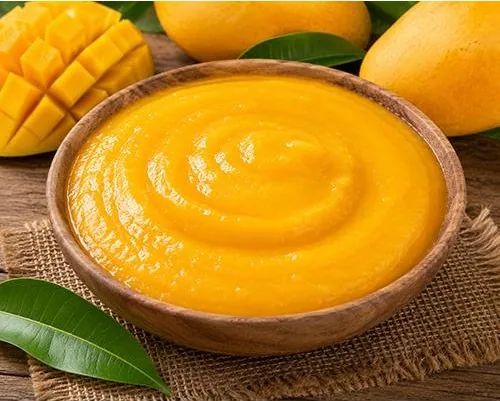
SNR Foods works with mango-based ingredients designed for commercial food and beverage applications. Mango puree and concentrate can provide manufacturers with convenient and consistent mango ingredients for a wide range of products.
Organic Mango Products from SNR Foods
SNR Foods offers mango-based products for food and beverage manufacturers looking for quality mango ingredients.
Our mango range includes products suitable for applications such as:
- Beverages and fruit drinks
- Juices and smoothies
- Ice creams and frozen desserts
- Yogurt and dairy applications
- Bakery and confectionery products
- Sauces and food preparations
- Industrial food and beverage applications
If you are looking for mango ingredients for your business, explore the SNR Foods Mango Product Range to learn more about our mango puree and concentrate options.
Why Mango Concentrate Is Valuable for Food and Beverage Manufacturers
Mango concentrate can be a practical ingredient for manufacturers that want to incorporate mango flavor and characteristics into commercial products while working with a concentrated ingredient format.
Depending on the application, mango concentrate can be used in beverages, desserts, ice creams, sauces, fruit preparations, and other food products.
For B2B buyers, choosing the right mango concentrate involves considering factors such as mango variety, Brix, flavor profile, application requirements, packaging, shelf life, quality specifications, and supply consistency.
SNR Foods works with businesses to understand these requirements and identify suitable mango ingredients for their applications.
Why Responsible Mango Sourcing Matters
For manufacturers and importers, sourcing is about more than purchasing an ingredient at the right price.
Buyers also need to consider:
- Product quality
- Consistency
- Traceability
- Processing standards
- Packaging
- Shelf life
- Supply reliability
- Application suitability
At SNR Foods, understanding the connection between mango cultivation, sourcing, processing, and the final application helps us serve businesses looking for reliable mango ingredients.
Building a More Sustainable Mango Supply Chain
Sustainable mango farming demonstrates how traditional agricultural knowledge and modern farming practices can work together.
Soil management, efficient irrigation, natural pest control, orchard sanitation, responsible harvesting, and careful processing can all contribute to a stronger mango supply chain.
For SNR Foods, the objective is not simply to supply a mango ingredient. It is to connect quality mango sourcing with the requirements of food and beverage manufacturers.
Conclusion: From Sustainable Orchards to Quality Mango Ingredients
Organic and sustainable mango farming is about more than producing fruit. It is about protecting soil, managing water responsibly, supporting farmers, and creating agricultural systems that can remain productive for years to come.
For businesses sourcing mango puree and concentrate, understanding where the fruit comes from and how it is cultivated provides valuable context for the ingredient supply chain.
SNR Foods brings this farm-to-processing perspective to its mango ingredient offering, helping food and beverage businesses source mango puree and concentrate for a variety of commercial applications.
Looking for Mango Concentrate for Your Business?
Whether you are a beverage manufacturer, food processor, ice cream manufacturer, dessert company, importer, or distributor, SNR Foods can help you explore mango ingredient options suited to your requirements.
Looking for specific specifications, quantities, or sourcing information? INQUIRE NOW and speak with the SNR Foods team about your requirements.
Our products
Other Fruits
Aseptic red papaya, white guava, pineapple and banana puree and concentrate, plus seasonal raw fruits sourced directly from our partner farmers.
Read moreGet in touch
Have a question about this post or our products? Send us a message and our team will get back to you.