
Published · By SNR Foods
Mango Puree vs. Mango Concentrate: Understanding the Key Differences
Discover the key differences between mango puree and mango concentrate, including their processing methods, texture, composition, applications, storage, and suitability for food and beverage manufacturing.
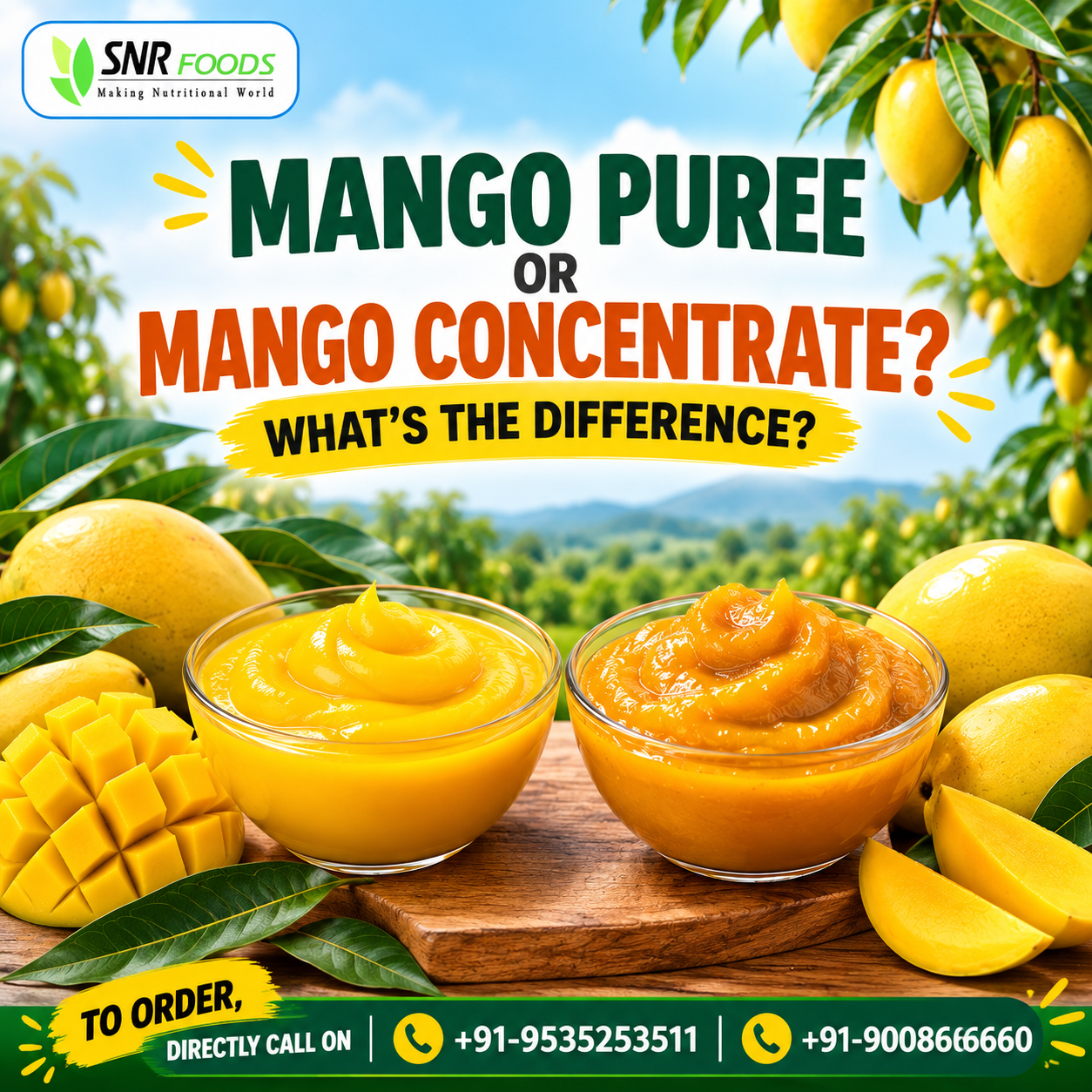
Mango is one of the world's most popular tropical fruits, valued for its rich flavor, vibrant color, natural sweetness, and versatility. To make mango available for food and beverage manufacturing throughout the year, it is processed into different forms, with mango puree and mango concentrate being two important ingredients.
Although both products come from ripe mangoes, they are not the same. They differ in processing, consistency, mango solids, formulation requirements, applications, and handling. Understanding these differences can help food manufacturers, beverage companies, dairy producers, and other buyers select the right mango ingredient for their products.
In this blog, we’ll explore the key differences between mango puree and mango concentrate, how each is produced, where they are used, and which option may be better suited to different manufacturing requirements.
What is Mango Puree?
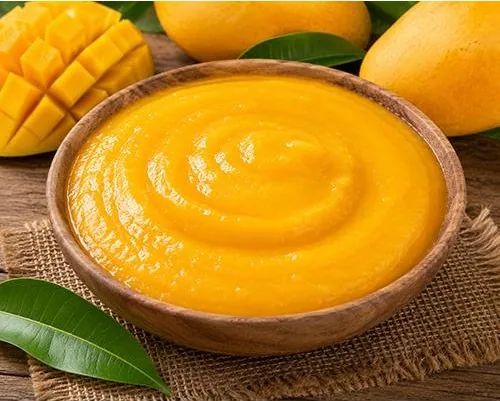
Mango puree is a thick, smooth fruit preparation made by processing ripe mangoes and separating the pulp from the skin and seed. The resulting product retains much of the mango's natural fruit character, including its flavor, color, aroma, and pulpy texture.
Because mango puree contains the natural fruit pulp, it is generally thicker and more viscous than mango concentrate. It is widely used where manufacturers want a noticeable mango body, natural fruit texture, and authentic mango flavor in the finished product.
SNR Foods offers mango puree suitable for a range of food and beverage applications. Explore SNR Foods Mango Puree.
What is Mango Concentrate?
Mango concentrate is produced by processing mango pulp or puree and removing a portion of its water content through controlled concentration. This increases the proportion of soluble mango solids and creates a more concentrated ingredient.
Compared with standard mango puree, concentrate is typically more intense in flavor and solids and can be useful when manufacturers need to achieve a specific fruit profile while using a smaller quantity of product. Depending on the formulation and intended application, concentrate may be reconstituted or blended with other ingredients during manufacturing.
SNR Foods supplies mango concentrate for food and beverage manufacturers looking for a concentrated mango ingredient. Explore SNR Foods Mango Concentrate.
Processing & Manufacturing: How Are They Made?
How Mango Puree is Made
Mango puree is produced with the objective of retaining the natural characteristics of the fruit. A typical process includes:
- Selection & Washing: Ripe, suitable-quality mangoes are selected and washed to remove dirt and surface contaminants.
- Peeling & Pulp Extraction: The mangoes are processed to separate the edible pulp from the skin and seed.
- Pulping & Refinement: The extracted pulp is processed to achieve a consistent texture while retaining the characteristic mango body.
- Heat Treatment: Depending on the product specification and processing system, controlled heat treatment may be used to support product stability and shelf life.
- Packaging & Storage: The finished puree can be packed using suitable commercial packaging systems, including aseptic formats.
How Mango Concentrate is Made
Mango concentrate starts with mango pulp or puree and undergoes an additional concentration stage:
- Fruit Selection & Pulp Extraction: Ripe mangoes are selected, processed, and converted into mango pulp.
- Purification & Standardisation: The pulp may be refined and standardised according to the required product specification.
- Concentration: A controlled process removes part of the water from the mango base, increasing the concentration of soluble fruit solids.
- Quality Control: The concentrate is checked against the required specifications for characteristics such as solids, flavor, color, and consistency.
- Packaging & Storage: The concentrate is packed in appropriate commercial packaging for storage, transportation, and use by manufacturers.
Key Difference Between Mango Puree and Mango Concentrate
Basic formProcessed mango pulpConcentrated mango pulp/puree with part of the water removed TextureThick and pulpyMore concentrated and typically denser Fruit solidsCloser to the original fruit pulpHigher concentration of soluble fruit solids Flavor profileNatural, full mango characterMore intense mango flavor per unit of product Typical useProducts where body and fruit texture are importantProducts where concentrated mango flavor and solids are required FormulationCan often be incorporated directly into formulationsMay be diluted, reconstituted, or blended according to the final formulation Storage & logisticsCommercial storage depends on packaging and specificationCommercial storage depends on packaging and specificationTexture & Consistency
One of the easiest ways to distinguish the two ingredients is their physical consistency.
TextureThick, smooth and pulpyMore concentrated and dense Fruit bodyProvides noticeable fruit bodyProvides concentrated fruit solids and flavor Usage approachSuitable when mango pulp characteristics are desiredSuitable when a concentrated mango ingredient is preferredNutritional & Composition Differences
Both mango puree and mango concentrate originate from mango fruit, so their composition is based on the characteristics of the mango used and the processing method. However, concentration changes the proportion of fruit solids relative to water.
- Mango puree retains the natural pulp and fruit body of the mango.
- Mango concentrate has a higher concentration of soluble fruit solids because part of the water has been removed during processing.
- The final nutritional profile of either ingredient depends on the mango variety, processing conditions, product specification, and any ingredients added during final formulation.
For industrial buyers, it is therefore important to compare the supplier's product specification rather than assuming that every mango puree or concentrate has identical nutritional or compositional values.
Applications: Where Are They Used?
Uses of Mango Puree
Mango puree is particularly useful in products where the natural body, texture, and fruit character of mango are important. Common applications include:
- Beverages: Smoothies, shakes, nectars, mango drinks, lassi, and fruit beverages.
- Dairy Products: Yogurts, dairy desserts, ice creams, and fruit preparations.
- Desserts: Mousses, puddings, sorbets, fillings, and other mango-based desserts.
- Bakery & Confectionery: Fillings, toppings, sauces, and mango-flavored formulations.
- Food Products: Sauces, fruit preparations, and other processed food applications.
View SNR Foods Mango Products.
Uses of Mango Concentrate
Mango concentrate can be valuable when manufacturers need a concentrated mango ingredient for formulation and product development. Typical applications can include:
- Fruit Beverages: Mango drinks, nectar formulations, and beverage bases.
- Juice Products: Formulations where concentrated fruit solids are required.
- Dairy & Dessert Products: Ice creams, yogurts, desserts, and other fruit-based products.
- Food Manufacturing: Sauces, fillings, fruit preparations, and formulated foods.
- Blended Fruit Products: Mango can be combined with other fruit ingredients to create specific flavor profiles.
Which Should You Choose: Mango Puree or Mango Concentrate?
The right choice depends on what your final product requires.
- Choose mango puree when you want a thicker fruit base, natural pulp characteristics, and a strong sense of mango body in the finished product.
- Choose mango concentrate when you need a more concentrated mango ingredient and want to manage fruit solids and mango flavor efficiently within a formulation.
For industrial applications, the decision should also consider the required Brix or solids specification, flavor profile, processing method, packaging, storage conditions, transportation requirements, and final product formulation.
Shelf Life, Storage & Commercial Handling
The shelf life and storage requirements of mango puree and mango concentrate depend on the product specification, processing conditions, packaging format, and storage environment. Aseptic packaging is commonly used for shelf-stable fruit ingredients because it helps protect the product from contamination after processing.
For commercial buyers, it is important to review the supplier's technical specification and certificate of analysis for the exact product being purchased. Storage temperature, packaging format, shelf life, opening instructions, and handling requirements should all be confirmed before procurement.
Why Choose SNR Foods for Mango Ingredients?
SNR Foods provides mango-based ingredients for food and beverage manufacturers looking for consistent fruit products for commercial applications. Our mango range includes mango puree, mango pulp, and mango concentrate, supporting different formulation and manufacturing requirements.
Whether you are developing beverages, dairy products, desserts, bakery products, sauces, or other fruit-based formulations, selecting the right mango ingredient can make a significant difference to the texture, flavor, consistency, and efficiency of your finished product.
Explore Mango Puree, Pulp & Concentrate from SNR Foods.
Other Fruit Ingredients from SNR Foods
Mango is only one part of the fruit ingredient range. If you are looking for fruit purees, concentrates, or other processed fruit ingredients for your manufacturing requirements, explore the wider range of SNR Foods fruit products.
Final Thoughts
Mango puree and mango concentrate both offer the rich taste and character of mango, but they serve different formulation needs. Mango puree is a pulpy fruit ingredient that provides natural mango body and texture, while mango concentrate is processed further to increase the concentration of fruit solids.
For manufacturers, the best choice depends on the desired product characteristics, formulation, processing requirements, solids specification, and commercial objectives. Understanding these differences makes it easier to select the right mango ingredient for consistent product development.
If you are sourcing mango puree, mango pulp, or mango concentrate for your business, contact SNR Foods to discuss your requirements.
Our products
Other Fruits
Aseptic red papaya, white guava, pineapple and banana puree and concentrate, plus seasonal raw fruits sourced directly from our partner farmers.
Read moreGet in touch
Have a question about this post or our products? Send us a message and our team will get back to you.